
Criminal Defense / DWI Defense

Know Your Rights During a Texas DWI Stop

Being pulled over on suspicion of DWI can be overwhelming. Understanding what officers can ask, what you're required to do, and which rights you can exercise may make a critical difference in your case.

Griffin & Cain helps drivers throughout Montgomery and Walker Counties understand their rights and challenge unlawful stops, improper testing procedures, and questionable evidence.

Schedule a Consultation

Field Sobriety Tests Are Voluntary.

Know what you're agreeing to.

Roadside field sobriety tests are not neutral checks. They are designed to generate evidence of impairment, they are subjective, and they are graded by the same officer who already suspects you. The tests are performed on the roadside under conditions nobody does well in, and many factors can affect your performance — including physical injuries, age, weight, poor lighting, uneven pavement, the wrong footwear, fatigue, and plain nervousness, even if you have had nothing to drink.
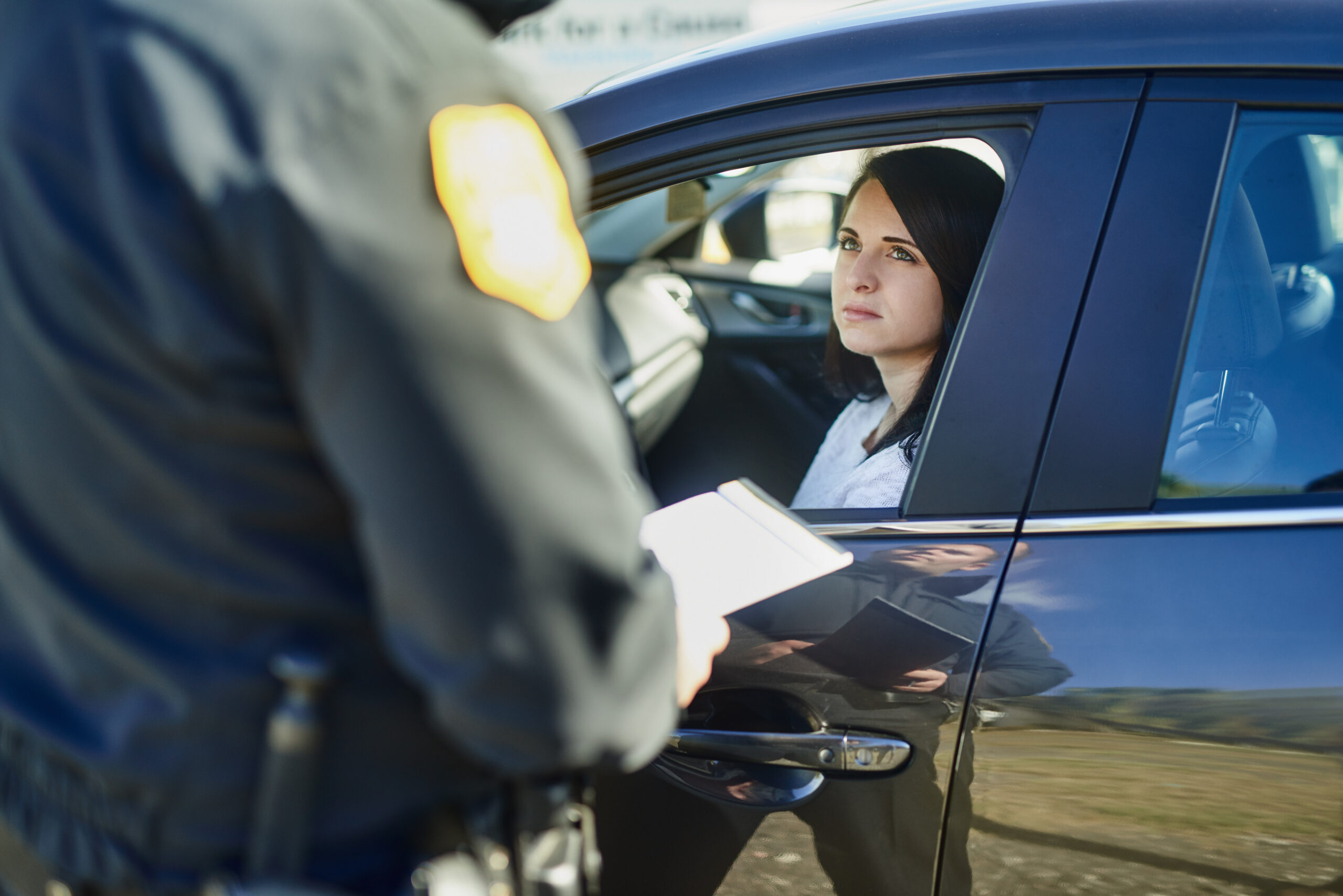
Driver performing a roadside field sobriety test while a police officer observes at night

You can decline the tests. You are not required to perform voluntary roadside field sobriety tests, and you do not owe an explanation for declining. A clear and respectful response is enough: "I respectfully decline to perform the tests."
You Do Not Have to Answer Incriminating Questions.

The Fifth Amendment protects you from being forced to incriminate yourself. Where are you coming from? Have you had anything to drink tonight? How much? When was your last drink? Officers are trained to ask exactly these questions, and every answer you give is written into the report and repeated at trial. You are not required to answer any of them.

You are required to hand over your driver's license, proof of insurance, and vehicle registration. Beyond that, you may politely decline to talk.

Know What to Say

"I would prefer not to answer questions without an attorney present."

That single sentence is legally sufficient. You never need to be rude or confrontational — but you also never need to hand the prosecution the evidence it will use to build a case against you.

Understanding Your Miranda Rights.

One point trips up almost everyone: Miranda warnings ("You have the right to remain silent...") are required only when you are in custody and being interrogated. During the roadside encounter, before a formal arrest, the officer does not have to read you your rights — yet everything you say can still be used against you. Your right to remain silent applies from the moment the lights come on. Do not wait for a warning to start using it.

After an Arrest, the Rules Change

Once you are formally arrested for DWI, a different set of rules takes over. Under Texas's implied consent law, by driving on Texas roads you are deemed to have consented to a breath or blood test after a lawful DWI arrest. The officer will read you a statutory warning that spells out what happens if you refuse or if you provide a sample.

You still have the right to refuse — but here, refusal has consequences. A first refusal triggers an automatic 180-day license suspension, and a later refusal carries a two-year suspension. Your refusal can also be presented to the jury as evidence against you. Before you are ever in that seat, it is worth understanding how breath and blood tests work in Texas DWI cases .

Refusing does not always prevent testing. Officers can ask a judge for a search warrant to compel a blood draw, and during "No Refusal" periods — common in Montgomery County around the holidays — judges are on standby to sign those warrants within minutes. Texas's mandatory blood draw law also requires a sample, refusal or not, when the officer believes the DWI involved a crash causing serious injury or death, a child under 15 was in the vehicle, or the driver has two or more prior DWI convictions.

Once you are arrested and booked, ask to speak with an attorney as soon as possible, and say nothing about your case to anyone else. Not to other inmates, not to jail staff, not to friends or family on recorded phone lines. Anything you say can surface later as evidence against you.

The first 24 to 48 hours matter more than most people realize. Early contact with a defense attorney protects your criminal case, and it protects your license too: Texas law gives you just 15 days to request the ALR hearing that defends your driving privileges .

If your arrest has already happened, the 15-day clock is already running. Contact our Conroe office today — requesting the hearing promptly preserves your ability to keep driving until the hearing is held and decided, and it puts a defense team to work while the details of your stop are still fresh.

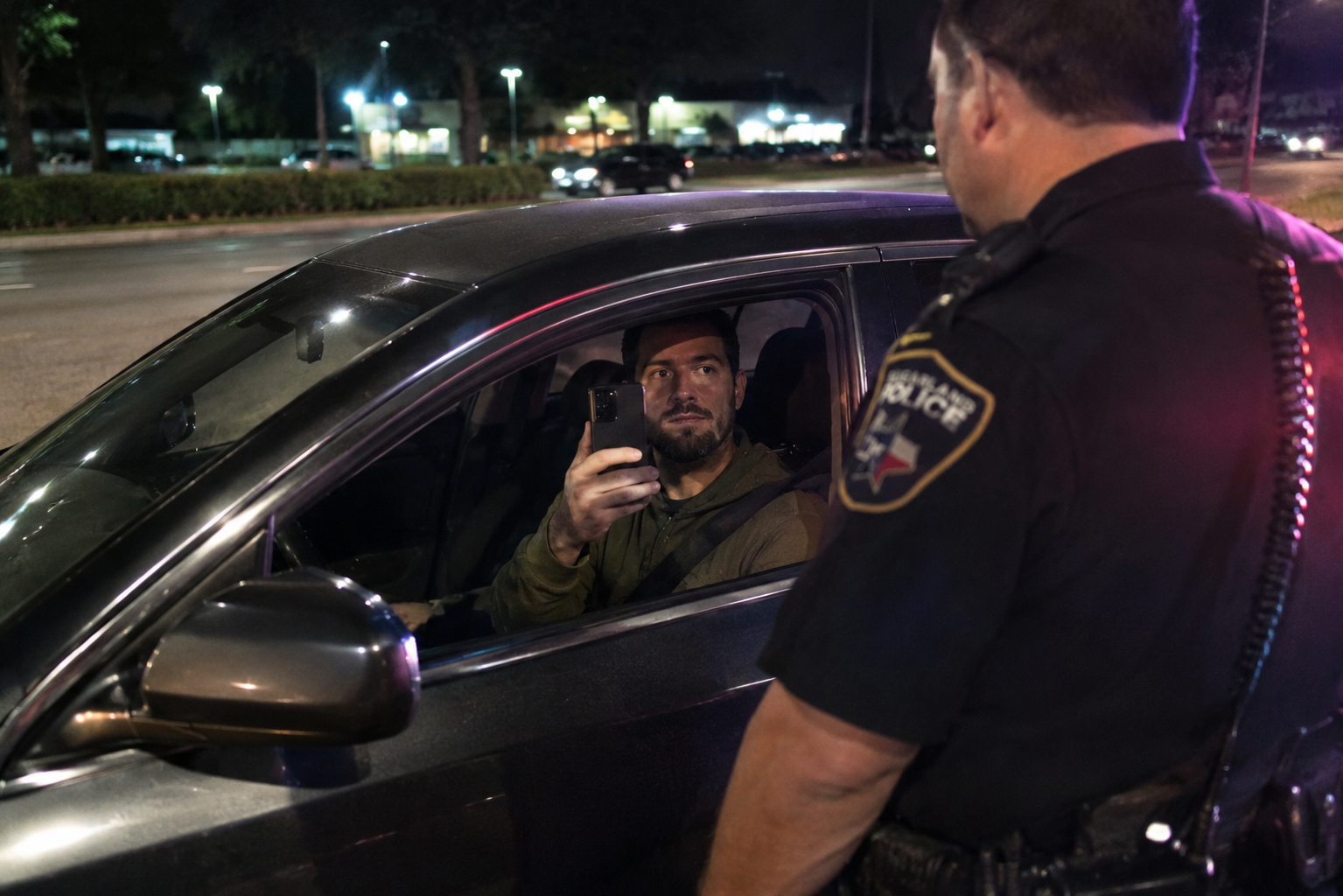
man recording a nighttime traffic stop on her smartphone from inside her vehicle

You Can Record The Stop.

Texas law does not prohibit you from recording your own traffic stop. You may record audio and video on your phone as long as you do not physically interfere with the officer's duties. Your recording can preserve exactly the kind of evidence DWI cases turn on: how the officer behaved, what the roadside conditions were like, and whether proper procedures were followed.

If you record, do it quietly. Do not make the phone the centerpiece of the encounter, and do not argue about your right to record — simply tell the officer you are recording if asked. Later, your attorney can compare your footage against the police report and any dashcam or body camera video.

What to Say During a DWI Stop: A Simple Playbook.

Knowing your rights is half the job; exercising them without escalating the encounter is the other half. Stay calm and stay polite. Hostile or aggressive behavior gives the officer more to write down — it can be documented as a sign of impairment — and it colors how your case is perceived later.

Hand over your license, insurance, and registration when asked; the law requires it, and refusing can lead to additional charges. Beyond that, less is more. The mistake we see most often is a driver who keeps talking because silence feels rude. Silence is not rude — it is a constitutional right, and on the roadside it is often the most valuable one you have.

01

“Here is my license, insurance, and registration.”

Provide the required documents without volunteering anything else.

02

“I would prefer not to answer questions without an attorney present.”

Polite, legally sufficient, and it closes the door on the questions that fill police reports.

03

“I respectfully decline to perform the tests.”

This covers the field sobriety tests and the roadside breath test alike. No explanation needed.

04

“I do not consent to any searches.”

Cooperation does not require consent, and a calm, clear refusal is enough.

05

“I would like to speak with an attorney.”

Ask early, repeat it after an arrest, and say nothing else about your case.

Frequently Asked Questions

Have Questions? We Have Answers.

Knowing your rights during a Texas DWI stop can help you make informed decisions during a stressful encounter. From answering questions and performing roadside tests to understanding what happens after an arrest, knowing the difference between voluntary requests and legal requirements matters.

Griffin & Cain represents clients throughout Montgomery and Walker Counties. Below are answers to some of the most common questions drivers have about their rights during a DWI stop.

Do I have to answer the officer's questions during a DWI stop?

You must provide your driver's license, proof of insurance, and vehicle registration. Beyond that, you are not required to answer questions about where you have been, whether you have been drinking, or how much. Politely declining to answer is fully within your rights.

Can I refuse field sobriety tests in Texas?

Yes. Field sobriety tests are voluntary in Texas, and there is no automatic penalty for declining. The tests are designed to generate evidence of impairment, and factors that have nothing to do with alcohol, such as injury, fatigue, footwear, and nerves, can cause poor performance.

What happens if I refuse a breath or blood test after my arrest?

Refusing a chemical test after a DWI arrest triggers an automatic license suspension of 180 days for a first refusal and two years for subsequent refusals. Your refusal can also be used as evidence against you at trial. In some situations, officers can obtain a warrant and compel a blood draw despite your refusal.

When do Miranda rights apply in a DWI case?

Miranda warnings are required only when you are in custody and being interrogated. During the roadside encounter, before a formal arrest, officers are not required to read you your rights, but anything you say can still be used against you. Your right against self-incrimination applies from the very start of the stop.

Can the officer take my license during the stop?

If you are arrested and either refuse testing or provide a sample of 0.08 or higher, the officer will take your physical license and issue a temporary driving permit valid for 40 days. If you request an ALR hearing within 15 days, you can keep driving until the hearing is held and a decision is made.

Should I cooperate with the officer during a DWI stop?

Be polite, provide the required documents, and follow lawful instructions, such as stepping out of the vehicle if asked. Cooperating does not mean answering incriminating questions, performing voluntary tests, or consenting to searches. Respectfully exercising your rights is the strongest position you can take.